Recently, I watched two of my friends, a couple, pull away from another friend of mine. She had been trying to help them both with their relationship. But she also talked to me about what was going on, and they felt betrayed. So they stepped back from her, to protect their relationship.
From the outside, pulling away can look cold. From the inside, it almost always feels like protection. If you keep pushing people away, especially the ones who matter, you’re not broken. You push people away because part of you believes that getting close leads to getting hurt, so keeping your distance feels safer. Once you understand what that part is protecting, you can start choosing differently.
Signs you push people away
Here’s what it can sound like from the inside:
- Getting close: “The week after a great weekend together, I suddenly need a lot of space.”
- Making plans: “I say yes to plans, then look for a reason to cancel as the day gets closer.”
- Replying: “The more someone texts me, the longer I wait to answer.”
- Finding flaws: “As soon as I start liking someone, I notice everything that annoys me about them.”
- Sharing: “When someone asks how I really am, I say ‘I’m fine’ and change the subject.”
- Conflict: “After an argument, I go cold instead of talking it through.”
- Endings: “I end things before they can end them.”
One of these on its own means very little. Everyone needs space sometimes. What matters is the pattern, especially if it shows up right when a relationship starts to feel good.
Why do I push people away? 6 reasons
1. Commitment feels unsafe
If a friend told me “I always ruin it when people get close,” I’d say: it looks like you’re afraid of commitment, probably because commitment somehow feels unsafe to you. Committing means someone can count on you, and you can count on them. If counting on people has hurt you before, part of you will do whatever it takes to avoid that again, including leaving first.
This fear is real enough that psychologists measure it. In 1991, Carol Descutner and Mark Thelen developed a Fear-of-Intimacy Scale to capture people’s anxiety about close relationships. It isn’t a quirk of a few people. It’s a common human fear.
2. You’ve been hurt, and you’re protecting yourself
Sometimes the pulling away follows a real hurt, like the couple I mentioned. Trust was broken, so they stepped back. That can be healthy: protecting yourself from someone who keeps hurting you is a boundary. It becomes a problem when one hurt turns into a rule, and you start keeping everyone at a distance just in case.
3. You’re afraid they’ll leave anyway
If people left before, whether it was a parent, a partner or a close friend, part of you may have concluded that everyone leaves eventually. Pushing them away gives you some control: if it ends, at least you chose it. The problem is that it often creates the very loss you were trying to avoid.
4. You don’t feel worth staying for
Sometimes the fear isn’t that people are unreliable. It’s that once they really know you, they’ll be disappointed. So you keep them at a distance before they find out. That belief usually comes from a harsh inner voice. Here’s how to quiet your inner critic.
5. You learned to rely only on yourself
If you had to take care of yourself early, needing people can feel uncomfortable or even dangerous. Letting someone close means letting them matter, and that feels like a risk you’ve learned not to take. If this sounds familiar, read about hyper-independence.
6. You need space and don’t know how to ask
Sometimes pushing people away is a real need, said badly. Maybe you’re an introvert, or you’re overwhelmed, and you need time alone to recharge. Instead of asking for it, you disappear. The need is valid. The way of meeting it is what can change.
What people get wrong about pushing people away
What I see missing most is compassion. People who pull away get labeled fast: cold, selfish, “avoidant.” But labels don’t help anyone come closer. Someone who pushes people away is usually scared, not heartless, and judgment only confirms what they already fear: that closeness isn’t safe. If you push people away, start by offering yourself the compassion others may not. If you wonder whether you’re avoidant, read Am I the Avoidant One?
“Nobody stays”: what’s underneath
In Within, “nobody stays” is one of the fears people name most often when they reflect on a hard moment. Here’s what I make of it: I think things go wrong when we perform in our relationships instead of acting as our true selves. If you’re performing, the people who stay are staying for the performance, and keeping it up is exhausting. At some point, you pull away, or they do.
When you align with yourself and stop performing, you naturally attract the right people, and those are the ones who stay. Research points the same way: in a study of college students in romantic relationships, Frederick Lopez and Kenneth Rice found that being authentic with a partner, refusing to deceive them and taking the risk of being known, predicted relationship satisfaction, even after accounting for self-esteem, commitment and attachment style.
Is pushing people away a symptom of something?
It can be linked to several things, and the behavior alone can’t tell you which. It’s often connected to an avoidant attachment style, past hurt or trauma, or a period of low mood or depression, when being around people feels exhausting. It’s worth talking to a therapist or doctor if you’ve been isolating for weeks, feel low most days, or the pattern keeps costing you relationships you want to keep. If you’re having thoughts of hurting yourself, call or text 988 in the US.
How to stop pushing people away
The goal isn’t to never need space again. It’s to choose how you take it, and to let people see who you really are.
1. Catch the moment you want to pull back
Notice the urge as it happens: the message you don’t want to answer, the plan you want to cancel, the sudden irritation. You don’t have to act differently yet. Just notice: “This is the moment I usually pull away.”
2. Name the fear
Finish this sentence: “If I let this person closer, I’m afraid that…” Maybe “they’ll see I’m not that interesting,” or “they’ll leave like everyone else.” Naming the fear makes it something you can look at, instead of something that drives you.
3. Say it instead of doing it
Instead of disappearing, try telling the person what’s going on, even a small part of it. You can borrow this: “I’m feeling a bit overwhelmed by how close we’re getting. It’s not you. Can I call you Sunday?” Most people would much rather hear that than be left wondering.
4. Ask for space, kindly
If you truly need time alone, ask for it with a clear return: “I need a quiet weekend to recharge. Let’s get dinner next week.” Space with a return date reassures the other person. Silence without one feels like rejection.
5. Stop performing, a little at a time
Notice where you play a role: always the fun one, always fine, always the helper. Pick one safe person and show them a bit more of the real you. Say what you actually think, or admit you’re having a hard week. Each time they stay, you collect proof that the real you is worth staying for.
6. Meet the part that wants to run
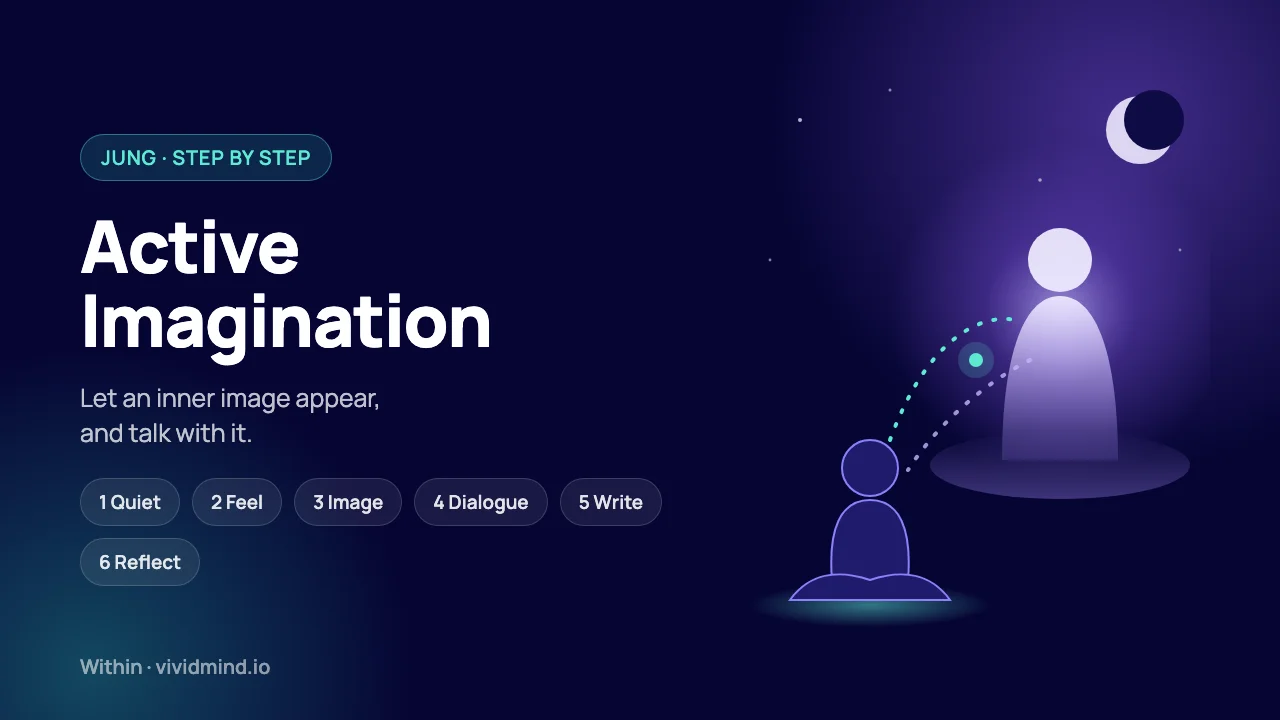
From a Jungian perspective, there’s a part of you behind this behavior, the side that says “Get out before it’s too late.” Picture it, and ask it what it’s afraid would happen if you stayed. Listen with compassion, without arguing. To go further, read Why Do I Self-Sabotage My Relationships? or try active imagination.
How Within helps
Within helps you catch the moment you pull away. Say a friend invites you on a weekend trip. You tell them you’re busy, feel relief, then guilt, and notice the thought “They’ll get bored of me once they really know me.” You log the moment, the feelings and the thought. In the reflection, you meet the part of you that said no and ask what it was afraid of. Over time, your entries show you who and what tends to trigger the pull back, so you can catch it sooner.
Try Within for free on iOS and Android.


Frequently asked questions
Is pushing people away a fear of commitment?
Often, yes. Pushing people away usually means closeness or commitment feels unsafe, so part of you creates distance before you can get hurt. It can also come from past hurt, low self-worth or simply needing space and not knowing how to ask.
Why do I push away people I love?
Because the people you love are the ones who could hurt you the most. The closer someone gets, the louder the fear of losing them becomes, and pulling away can feel like a way to stay safe. Noticing that fear is the first step to staying.
Can you stop pushing people away?
Yes. It usually doesn’t stop all at once, but you can learn to notice the urge, name the fear behind it and say what you need instead of disappearing. Each time you stay a little longer, and show a little more of who you are, you give yourself new evidence that closeness can be safe.